
Omega-3 Fatty Acids Nedir?
Omega-3 are polyunsaturated essential fatty acids found in high amounts particularly in cold-water fish, flaxseed and walnuts. EPA (eicosapentaenoic acid) and DHA (docosahexaenoic acid) are their best-known derivatives.
The structure shown here corresponds to the EPA (C20H30O2) form. Because the body cannot produce these fatty acids in sufficient amounts, they are among the nutrients that must be obtained through the diet.
In the scientific literature, omega-3 fatty acids are among the most studied nutrients for cardiovascular health, where research has examined their effects on triglyceride levels and vascular function. DHA is a major structural component of the brain and retina, and studies have explored omega-3 intake in relation to cognitive and visual health as well as the body’s inflammatory balance. These reflect areas of ongoing nutritional research.
SAĞLIK MEVZUATI UYARISI
Sıkça Sorulan Sorular
Omega-3 fatty acids are a type of polyunsaturated essential fatty acid. They are crucial nutrients that the body cannot produce in sufficient quantities, meaning they must be obtained through diet. The most well-known forms are EPA (eicosapentaenoic acid) and DHA (docosahexaenoic acid).
Omega-3 fatty acids encompass various structures. The chemical formula provided for EPA (eicosapentaenoic acid), a prominent omega-3, is C20H30O2.
Omega-3 fatty acids are found in significant amounts in various natural sources. These include cold-water fish such as salmon, mackerel, and sardines, as well as plant-based sources like flaxseed and walnuts.
Scientific literature shows extensive research on omega-3 fatty acids, particularly concerning cardiovascular health, including their effects on triglyceride levels and vascular function. DHA, a key omega-3, is a major structural component of the brain and retina, leading to research into its role in cognitive and visual health, as well as the body's inflammatory balance. These areas represent ongoing nutritional research.
Omega-3 fatty acids are a type of compound/chemical substance, not a drug or medicine. Supplements containing omega-3 fatty acids are not a substitute for prescribed medication or a balanced diet. If you have any health conditions, it is essential to consult with your doctor.
While generally considered safe as part of a balanced diet, it is advisable to consult with a healthcare professional before taking omega-3 supplements, especially if you are pregnant, breastfeeding, have an existing illness, or are taking other medications. They can provide personalized advice based on your health status.
Products Containing This Active Ingredient
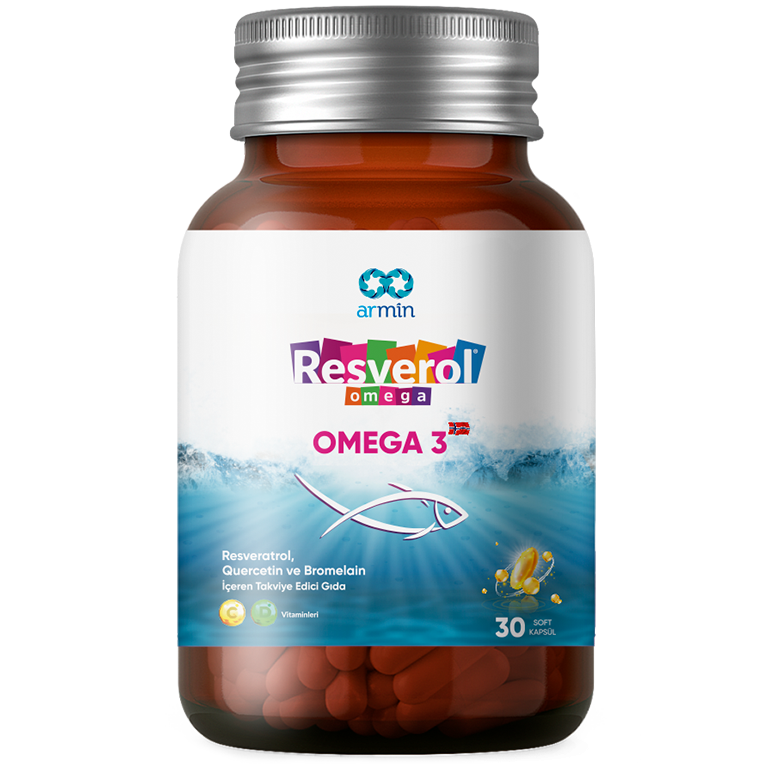 30 Soft KapsülResverol Omega 3Resverol Omega 3; Omega 3 (EPA ve DHA), Resveratrol, Quercetin ve Bromelain içeren, C ve D vitaminleriyle desteklenmiş…View